

Jacaranda Mobile APK Guide for Nigerian Users
Discover Jacaranda Mobile APK 📱—learn how to install, use safely & troubleshoot in Nigeria 🇳🇬. Get tips to enjoy this app with ease and explore local alternatives today!
Edited By
Claire Mitchell
The Jacaranda Crash Strategy targets sudden market declines, offering traders a method to benefit from sharp price drops. This approach fits well with volatile markets where rapid movements leave opportunities open for those prepared to act fast.
Originally built for stock or forex markets, the strategy still works for crypto and commodities when market sentiment turns bearish. For Nigerian traders, where market swings can be jolting due to economic shifts, this method provides a structured way to trade crashes rather than panic.

Key to the strategy is spotting early signs of an imminent drop. Traders watch for indicators such as increased selling volume, weakening support levels, or a sudden shift in momentum accompanied by news or economic triggers. For example, if NGX-listed shares suddenly lose support at critical price points with rising trade volumes, this may flag a crash setup.
After spotting such signals, the strategy advises entering sell or short positions with precise stop-loss limits. This risk control is vital to avoid heavy losses if the crash doesn't continue. The usual stop-loss sits just above recent resistance points to allow natural market wiggle room.
Jacaranda Crash Strategy also recommends trade size management to prevent overheating any single position. A 1–3% capital risk per trade is standard to protect the trader's portfolio from sudden unexpected reversals.
Successful use of this strategy depends greatly on discipline — entering only on clear signals and sticking to risk limits. Overtrading or chasing losses often leads to bigger troubles.
In practice, a trader might:
Identify a sharp drop in price on their chart with increased volume
Confirm trend weakness through momentum indicators like RSI or MACD
Place a short trade close to the breakdown level
Set a stop-loss slightly above a recent high
Plan for quick exit targets to lock in gains as prices drop
This step-by-step approach suits both novice and experienced traders looking to harness periods of market stress rather than avoid them. For Nigerian retail investors, understanding and applying this can bring an edge when the naira or equities fluctuate unexpectedly.
Overall, the Jacaranda Crash Strategy offers a practical blueprint for trading volatile drops — provided you combine it with solid market analysis and strict money management.
Understanding the Jacaranda Crash Strategy starts with recognising its focus: profiting from sudden stock market declines. This approach suits traders who want to act quickly when markets dip sharply rather than waiting for traditional bullish trends. Nigerian markets, known for periodic volatility due to external shocks and local economic shifts, present ample opportunities for this strategy.
At its core, the Jacaranda Crash Strategy operates on the idea that sudden market drops are not just threats but also chances to gain. It involves identifying these sharp falls early, then taking short or inverse positions to benefit financially as prices slide. Traders using this method rely heavily on technical analysis and indicators to spot these shifts in momentum.
For example, if a stock like Dangote Cement unexpectedly drops 5% within a single trading session, this strategy aims to capitalise on the continuing downward momentum rather than viewing the fall as a permanent loss.
The strategy’s profit hinges on quick response. When early crash signals trigger, traders enter positions designed to make gains as prices fall further. This could be through short selling or trading derivatives linked to the underlying assets. Nigerian traders can use platforms with margin facilities or derivatives markets, where available, to execute these moves.
Proper timing is key—exiting positions just before the market bounces back preserves profits. For instance, during the 2020 market sell-off linked to the COVID-19 pandemic, traders who entered short positions on large-cap stocks early reaped significant returns by exiting before recovery began.
Several indicators can hint at a possible crash, useful for Jacaranda Strategy users. Rapid spikes in market volatility, identified by measures like the VIX index or local equivalents, often signal growing uncertainty. A sudden drop in major indices such as the Nigerian Stock Exchange (NSE) All-Share Index beyond usual daily ranges can also be a red flag.
Also, volume surges during down moves – when sell orders flood the market unusually – show panic or strong selling pressure. For example, a dramatic increase in sell orders for stocks like MTN Nigeria may foreshadow a market downturn.
Market crashes are marked by sharp, often sudden price declines with little relief initially. Liquidity may dry up, causing wider bid-ask spreads. Panic selling drives prices further down, disrupting typical patterns of buying support.
During such phases, some traders exit positions hastily while others seize the volatility for quick gains. The Jacaranda Crash Strategy thrives on recognising this behaviour early and positioning to benefit from the downward surge before market sentiment stabilises.
Acting decisively when these crashes start can differentiate successful traders from those who get caught holding losses. The Jacaranda Crash Strategy helps you spot the signs and act with discipline.
This section sets the foundation for deeper exploration of the strategy’s mechanics, risk management, and practical adaptation for Nigerian traders ahead.
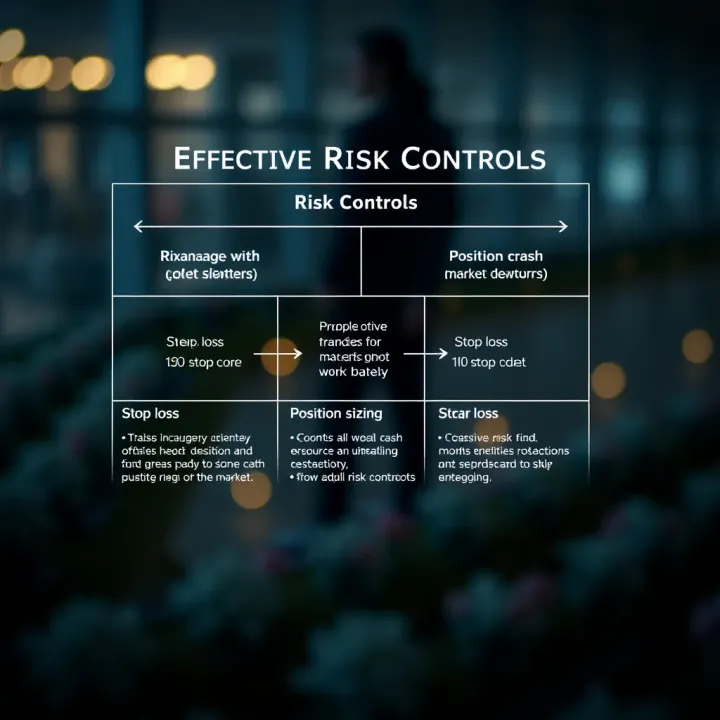
Understanding the core elements of the Jacaranda Crash Strategy is essential for any trader looking to capitalise on sudden market drops. These elements set the foundation for when to enter and exit trades, as well as how to use technical tools effectively. Without a firm grasp on these components, one risks mistiming trades or holding positions too long, resulting in losses instead of gains.
The entry point in the Jacaranda Crash Strategy is often triggered by clear signs of an upcoming market dip. Traders typically look out for sudden shifts in market sentiment — like a sharp drop in market breadth or significant volume spikes on down days. For example, if the Nigerian Stock Exchange (NGX) All-Share Index dips heavily alongside increased volume, this may signal a crash phase, offering a window to enter a short position or buy protective assets.
Timing entry is crucial because jumping in too early might expose traders to minor pullbacks mistaken for bigger crashes. Conversely, entering too late could mean missing potential profits. Hence, traders often wait for confirmation through price action patterns or indicators before committing capital.
Exiting at the right time preserves profits and limits losses. The strategy suggests monitoring momentum indicators and price recovery signals to decide when to close positions. For instance, if the Relative Strength Index (RSI) moves from oversold territory back above a set threshold, it may indicate the crash is abating, signalling an exit point.
Also, watching for support levels forming on charts is practical. When prices stabilise around key support zones, it often marks the end of the crash's sharp decline. Holding beyond this point can expose traders to rebound losses as the market normalises or rallies.
Moving averages (MA) and Relative Strength Index (RSI) are widely used in the Jacaranda Crash Strategy for good reason. MA smoothens price data, helping traders spot trend direction and potential reversals. For example, if the short-term MA crosses below the long-term MA (a "death cross"), it signals a deepening downward momentum – a cue to consider opening a crash position.
RSI helps identify overbought or oversold conditions. During a crash, RSI tends to dip below 30, signalling oversold assets that may soon rebound. Traders use this to gauge entry or exit points — if RSI remains low but price still drops, the trend may continue; if RSI starts rising, it signals an exit.
Interpreting these indicators during crashes requires extra caution. For instance, MAs tend to lag price, so during fast crashes, traders shouldn’t rely solely on crossover signals but should combine them with volume and price action for confirmation. A sharp dip in RSI during a crash is common but waiting for divergence, where price makes a new low but RSI doesn’t, often signals weakening bearish momentum.
In Nigerian markets, where volatility can be high and sudden rumours affect prices, mixing these indicators with market news and broader economic cues helps avoid false signals. For example, during ember months, market sentiments often swing wildly; relying just on technicals could mislead traders. Combining multiple indicators with context improves decision-making.
Having a clear set of entry and exit rules coupled with smart use of technical tools enhances your chances of profiting from crashes while managing risks effectively. This approach transforms guesswork into informed trading.
By mastering these core elements, Nigerian traders can better navigate sudden downturns, protect capital, and turn volatile conditions into growth opportunities.
Risk management plays a vital role when using the Jacaranda Crash Strategy, especially because this approach targets sudden market falls, which can be unpredictable and volatile. Traders who fail to manage risks properly often suffer heavy losses due to sharp reversals or false signals typical during market crashes. A well-structured plan for risk limits ensures you protect your capital and stay in the game for the long haul.
Stop-loss orders act as a safety net to prevent the kind of losses traders cannot recover from, particularly amid the turbulence of crash conditions. When markets swing wildly, prices can gap quickly beyond expected levels, wiping out gains or capital. For example, if you enter a position expecting a 5% drop but the market suddenly surges 10% against you, a stop-loss set just below your entry shields you from compounded losses. Nigerian traders should set stop-loss points based on realistic market volatility; for instance, during ember months, volatility could be higher due to political or economic events.
Setting take-profit levels requires a balance between optimism and caution. In crash scenarios, rapid market drops may slow or reverse, so targeting excessive gains often leads to missed exits or losses if the market bounces back quickly. Traders should use previous crash patterns or technical indicators such as support levels to pinpoint where to exit. For example, if the strategy signals a market drop of about 8%, it’s reasonable to set a take-profit near that figure instead of hoping for double-digit gains in one go.
Choosing how much capital to commit per trade is crucial to avoid blowing your account during inevitable losses. The Jacaranda Crash Strategy benefits from disciplined sizing — risking only a small percentage (for example, 1-3%) of your trading capital on each position. This way, even multiple unsuccessful trades don’t drain your resources. For instance, a trader with ₦500,000 capital might risk ₦5,000 per trade. This approach helps smooth out the ride through volatile markets.
Market conditions are never static; sometimes volatility surges, like during economic shocks or policy announcements. On such days, it’s wise to scale down your position size or even sit out. Conversely, when indicators suggest a strong, clear crash signal, slightly increasing allocation can enhance profits while still keeping risk manageable. Nigerian markets can be especially sensitive to local factors like naira exchange rate shifts or fuel scarcity, so being flexible with your capital allocation aligns well with real market behaviour.
Effective risk management with stop-loss, take-profit, and position sizing is your shield against the unpredictability of crash trading. Without it, even the best strategy will falter.
In summary, managing risks thoroughly gives you the confidence to apply the Jacaranda Crash Strategy effectively. Stop-losses prevent devastating losses, take-profits secure reasonable gains, and prudent position sizing ensures longevity in trading. For Nigerian traders facing local market quirks, adapting these principles is not just smart – it’s essential.
Trading the Jacaranda Crash Strategy effectively in Nigeria demands a clear understanding of how local market conditions affect price movements. The Nigerian markets have unique volatility patterns, influenced by political events, economic reports, and even fuel scarcity, which can cause sudden shifts. Recognising these factors helps traders refine the strategy to fit the local context, improving timing and decision-making.
The Nigerian market tends to experience sharp but often short-lived movements around political announcements, CBN monetary policy changes, or unexpected disruptions like power outages. For example, diesel subsidy debates or election seasons often trigger abrupt price reactions that don't always follow traditional global market signals. Traders need to interpret the Jacaranda Crash signals with this volatility lens, avoiding knee-jerk responses to insider news or localised shocks that may not indicate a broader crash.
Moreover, the significant presence of retail traders and relatively lower liquidity compared to international markets means price swings can be exaggerated. The strategy must account for these exaggerated dips by using tighter entry and exit points or smaller position sizes to manage sudden reversals.
Selecting the right trading platform and broker is critical for Nigerian traders. Platforms like GTI Securities, Meristem, and ARM Investment provide access to the Nigerian Stock Exchange (NGX) and currencies, while global platforms like IG and eToro offer forex and commodities trading, essential for diversifying crash strategy applications.
However, Nigerian traders should confirm broker regulatory compliance and reliable payment options (such as local bank transfers or Paystack integration) to avoid difficulties with fund withdrawal or unexpected charges. Fast execution speed and mobile app availability also matter, especially when acting on sudden crash signals during volatile periods.
One major pitfall is mistaking short-term noise for actual crash signals. Nigerian markets can produce false alarms due to rumours or isolated incidents — for instance, a headline about naira depreciation or political unrest might spark panic selling that quickly reverses. Following every signal without proper confirmation results in frequent losses and psychological stress.
Traders should use confirmation tactics such as combining multiple indicators or waiting for corroborating volume trends before opening positions. Ignoring the broader market context and relying solely on a trigger can erode profits over time.
Failing to apply disciplined risk management undermines the Jacaranda Crash Strategy’s effectiveness. Some traders might skip setting stop-loss orders because they expect quick rebounds or hold oversized positions due to overconfidence in local trends. This approach exposes capital to severe drawdowns, especially given Nigeria's periodic market whiplash.
Applying strict stop-loss limits and realistic take-profit targets is non-negotiable. Position sizing must reflect individual risk tolerance and the unpredictability of Nigerian markets. For instance, limiting exposure to ₦100,000 in a single trade instead of overcommitting helps preserve capital during unexpected reversals.
Successful use of the Jacaranda Crash Strategy in Nigeria blends technical insight with practical awareness of local market quirks and disciplined risk controls. This balance increases chances of steady gains despite the country’s unique economic shocks.
By tailoring this approach to Nigeria’s realities and avoiding common mistakes, traders can navigate crash scenarios with greater confidence and precision.
Monitoring how the Jacaranda Crash Strategy performs is not just advisable—it’s necessary. Without tracking, you will not know if your trades are hitting the mark or missing it altogether. Evaluating the strategy regularly helps you see which parts work and which need tweaking, especially given how fast markets can change in Nigeria. For example, during the ember months, volatility tends to spike, so checking if your approach still holds in such periods can save you losses.
The key indicators to measure success include your win-loss ratio, average return per trade, and how closely your trades align with predictions of the market crash. If you find yourself losing more than winning or not hitting your expected profit margins, these metrics help pinpoint the weak spots. Consider this: if you enter trades only during specific crash signals but witness limited profits, it may mean your entry timing or stop-loss levels need adjustment.
Using past trades as a learning tool provides practical insights for future decisions. Recording your trades with details on entry points, exit points, and market context enables you to reflect on patterns and mistakes. For example, you might discover that trades during certain market hours consistently perform better than others in the Nigerian Stock Exchange (NGX). This reflection informs when to be more active or patient, sharpening your strategy over time.
Markets rarely stay the same, so flexing your strategy to changing conditions keeps it relevant. Suppose new economic policies or fluctuating naira exchange rates shift market behaviour. In that case, being rigid with your initial rules might cost you. Adjusting for these shifts could mean altering entry signals or tweaking stop-loss placements to protect your capital better.
Improving the strategy based on lessons learnt is about fixing flaws and building on strengths. For instance, if you notice that sudden dips tied to political announcements lead to quicker recoveries than expected, you might shorten your holding period after entry. This continual refinement turns your approach into a well-tuned tool, customised for the challenges and opportunities specific to the Nigerian market.
Regular monitoring and evaluation create a feedback loop that sharpens your mastery of the Jacaranda Crash Strategy, helping you stay ahead rather than playing catch-up.
In summary, make it a habit to measure your trades with clear benchmarks, review past decisions objectively, adapt to market realities in Nigeria, and keep improving your tactics. This disciplined approach turns volatility from a foe into a friend, enabling profitable trading during market crashes.
Discover Jacaranda Mobile APK 📱—learn how to install, use safely & troubleshoot in Nigeria 🇳🇬. Get tips to enjoy this app with ease and explore local alternatives today!

Explore Jacaranda Bet app designed for Nigerian bettors 🇳🇬 Discover easy installation, diverse betting markets, secure payments in ₦, plus 24/7 support 📲

📱 Discover how to safely download and install Jacaranda APK on your Android device in Nigeria. Learn key features, security tips, and solutions for common issues. 🇳🇬

Learn how Nigerian students and educators can easily complete Jacaranda online registration ✅ with clear steps, common challenges, requirements, and smart tips 📚.
Based on 7 reviews